
How a garment gets made.
Three or four appointments across eight to ten weeks. Here is what happens in each one.
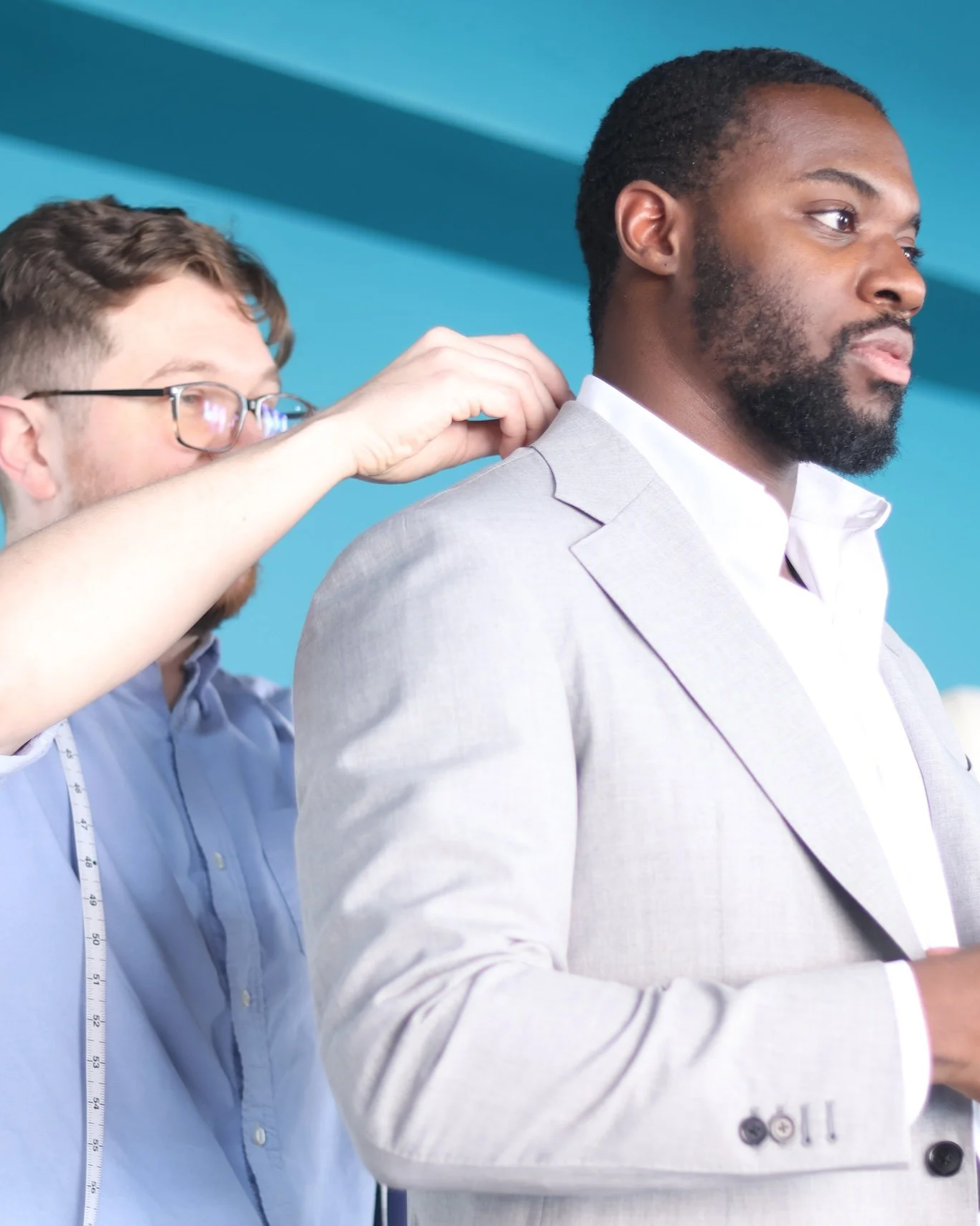
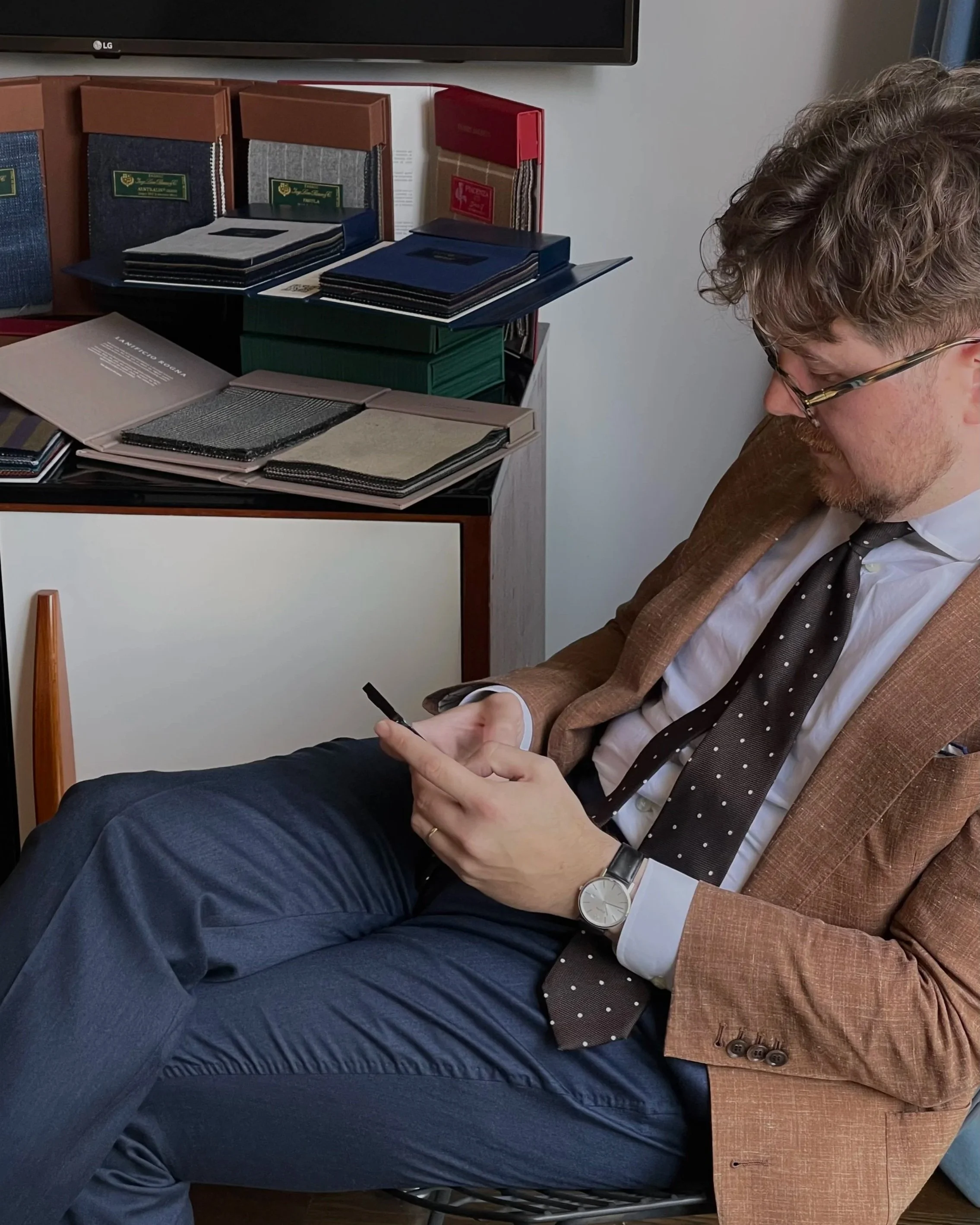
The consultation
An hour to an hour and a half, at your home or your office.
Most of it is conversation. What your week actually looks like, where you need to be dressed and how, what you own that never gets worn and why. Someone who spends four days in meetings and one on a site needs different clothing from an attorney who is in a courtroom, and none of that shows up on a tape measure.
Then cloth, then the details of the garment, then measurements. A full set, taken on paper, and then your posture gets read alongside them: how you stand, whether one shoulder sits lower than the other, how your weight settles when you are not thinking about it. Photographs from four angles, so nothing is left to memory.
Those observations matter as much as the numbers, and almost none of them show up on a tape. By the time the appointment ends, your fit has stopped being an estimate.
You leave with the next appointment booked.
The cloth
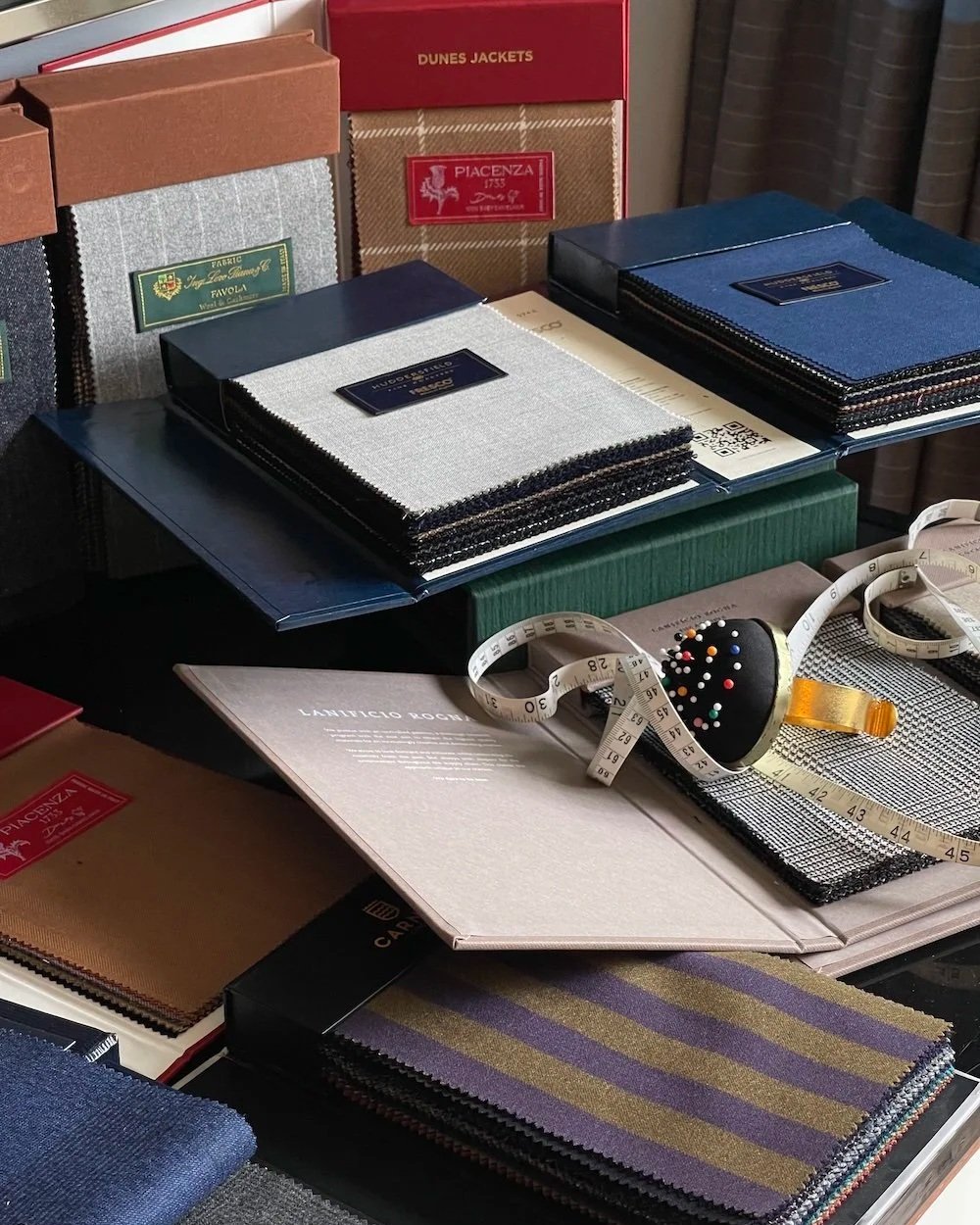
The cloth has more of an impact on how a garment looks on you than you might expect.
The fabric selection you are presented is derived from what you indicated in the first part of the appointment. Where you will be wearing it, how often, in what season, and how you want to come across when you walk into the room. A suit for four days a week of client meetings wants something that recovers overnight and keeps its shape. A jacket for Saturdays might be a bit more relaxed.
You will see a handful of options chosen for that, with a recommendation and the reasoning behind it.
We offer three tiers. The construction is identical at every one, and only the cloth changes.
The toile
About three and a half weeks after the consultation, we will meet for your toile fitting.
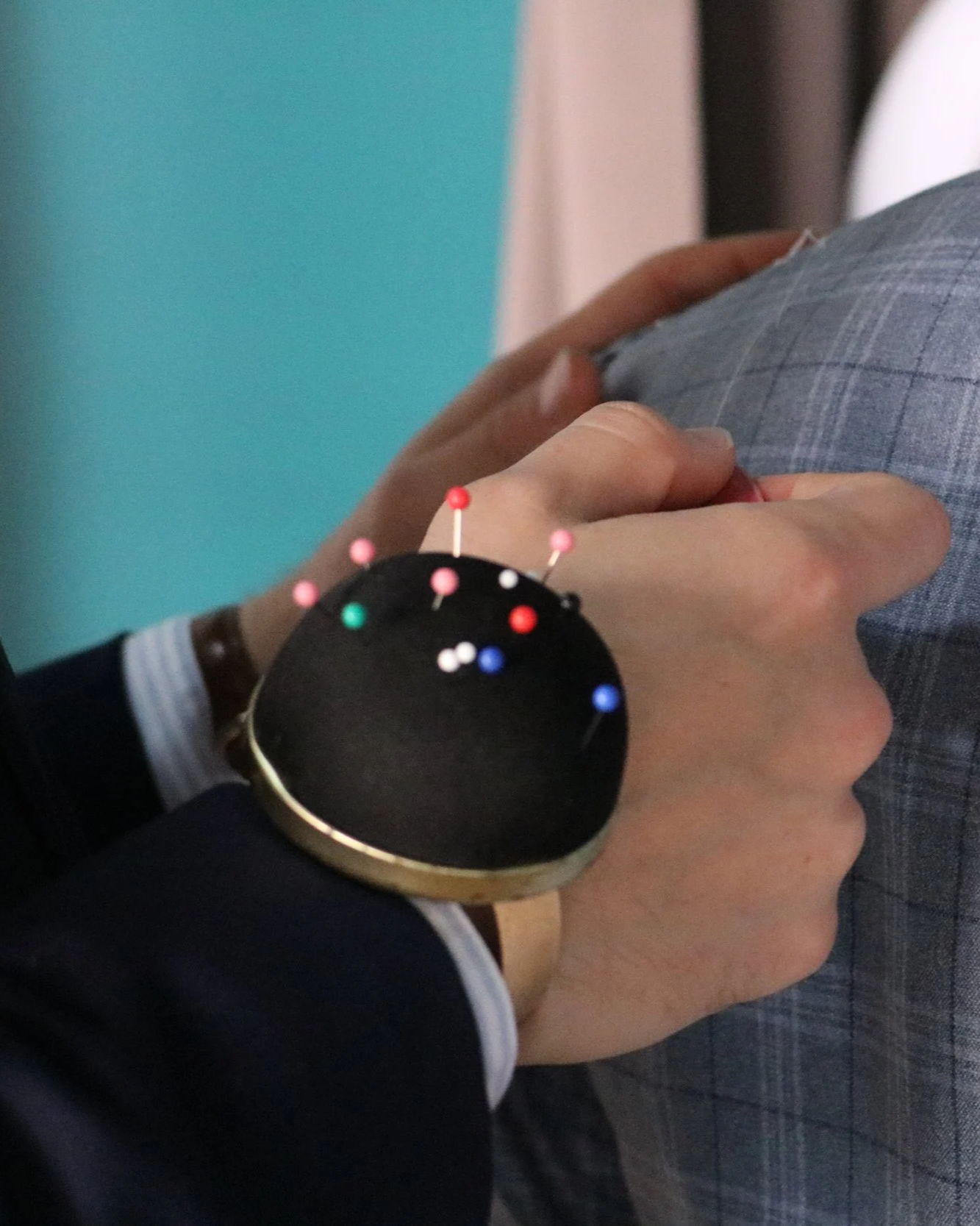
A toile is an unfinished garment, made from inexpensive cloth and built as a test of your pattern. It will not look like much, and it is not meant to. Its job is to show, on your body, whether everything read at the consultation was read correctly: the set of the shoulders, the balance front to back, how the jacket hangs when you stand the way you actually stand.
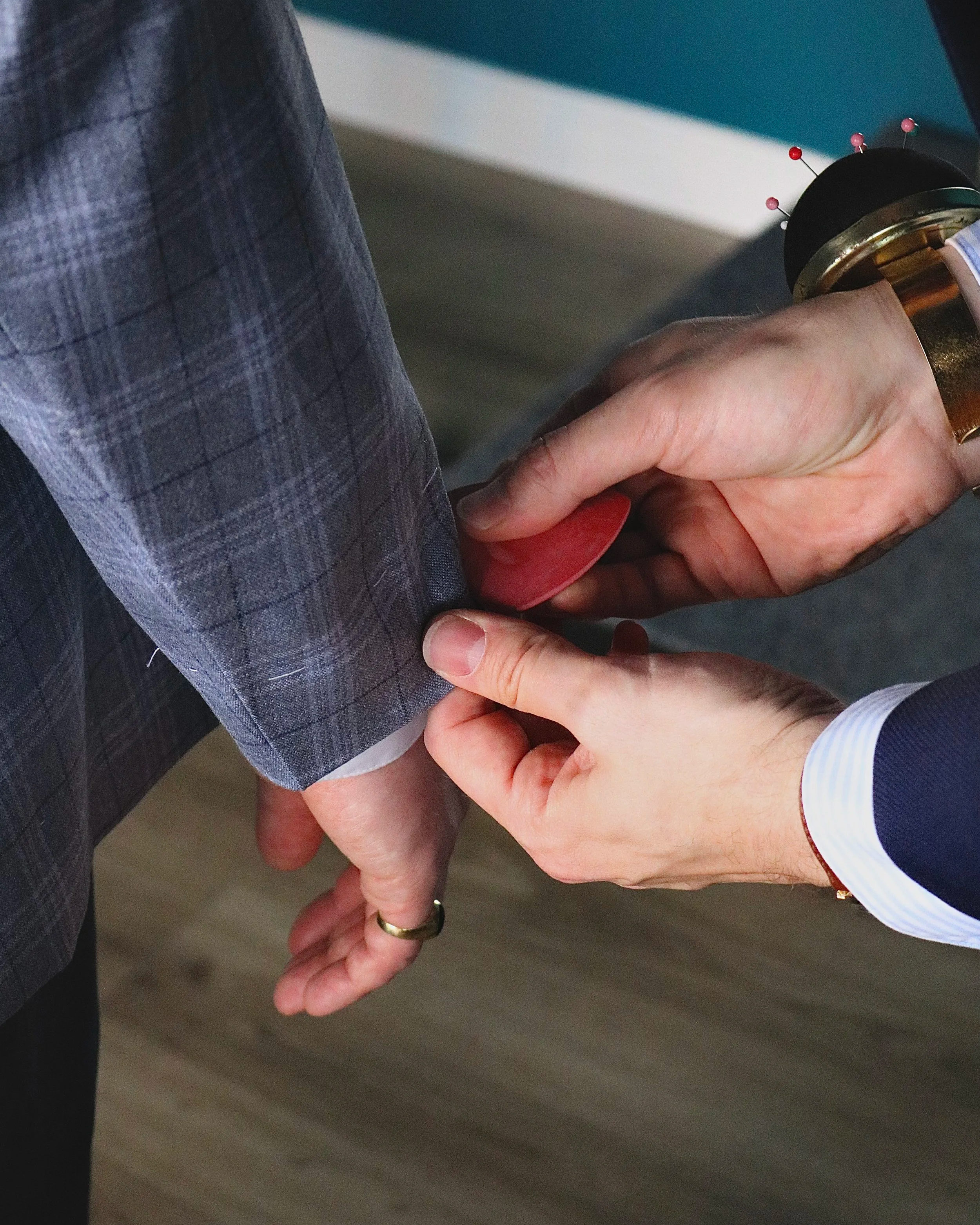
It gets fitted, marked and pinned while you wear it. Every correction is made in cloth that costs nothing, so by the time your own fabric is cut, the questions have already been answered.
What comes out of this appointment stays with you. Every garment made for you afterward starts from a fit that has already been proven on your body.
The fitting
Your garment arrives pressed and finished, hanging in its bag, and it is fitted on you wherever you are.
The garment is fitted to you as you move and settle into it, and the small things that separate something that fits from something that feels made for you are resolved before it leaves your hands.
Most clients take it home that day. If anything needs a final adjustment, a second fitting follows, and then it is yours.
Judging whether it is right is not your job. All you have to decide is whether you like what you see.
After
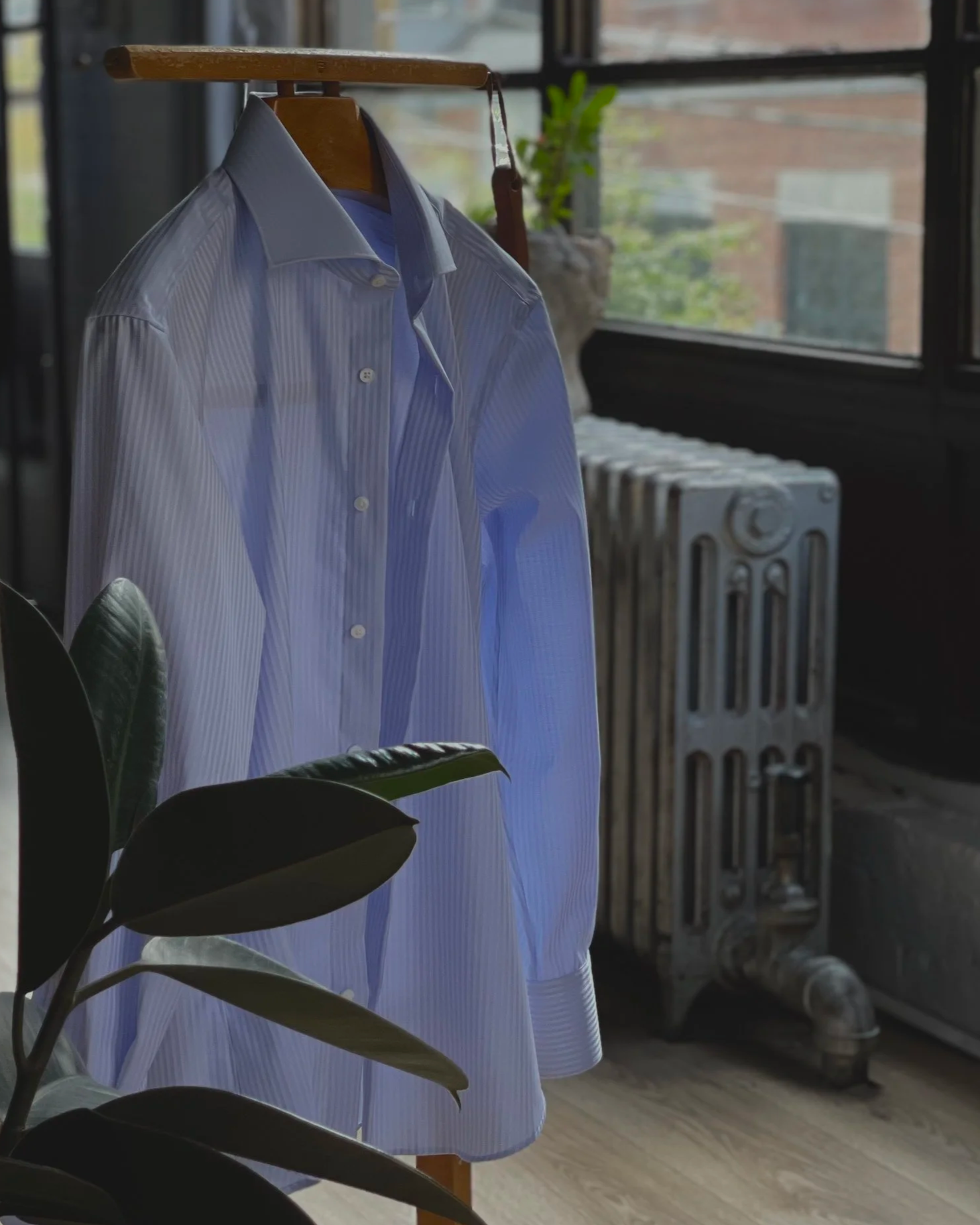
Alterations are included for as long as you own the garment, excluding work needed after a significant change in body weight. Cloth settles and bodies change, and something worn for three years should still sit the way it did the week it came home. Send a photograph and you will hear back on whether it is a quick fix or something that needs a closer look.
A care guide comes with every garment. It is shorter than it sounds: good tailoring mostly wants rest, air, and a brush.
And your fit stays on file. Everything learned making your first garment carries into every one after it, which is how one commission becomes a wardrobe.
An hour at your home or your office, and everything on this page follows from it.